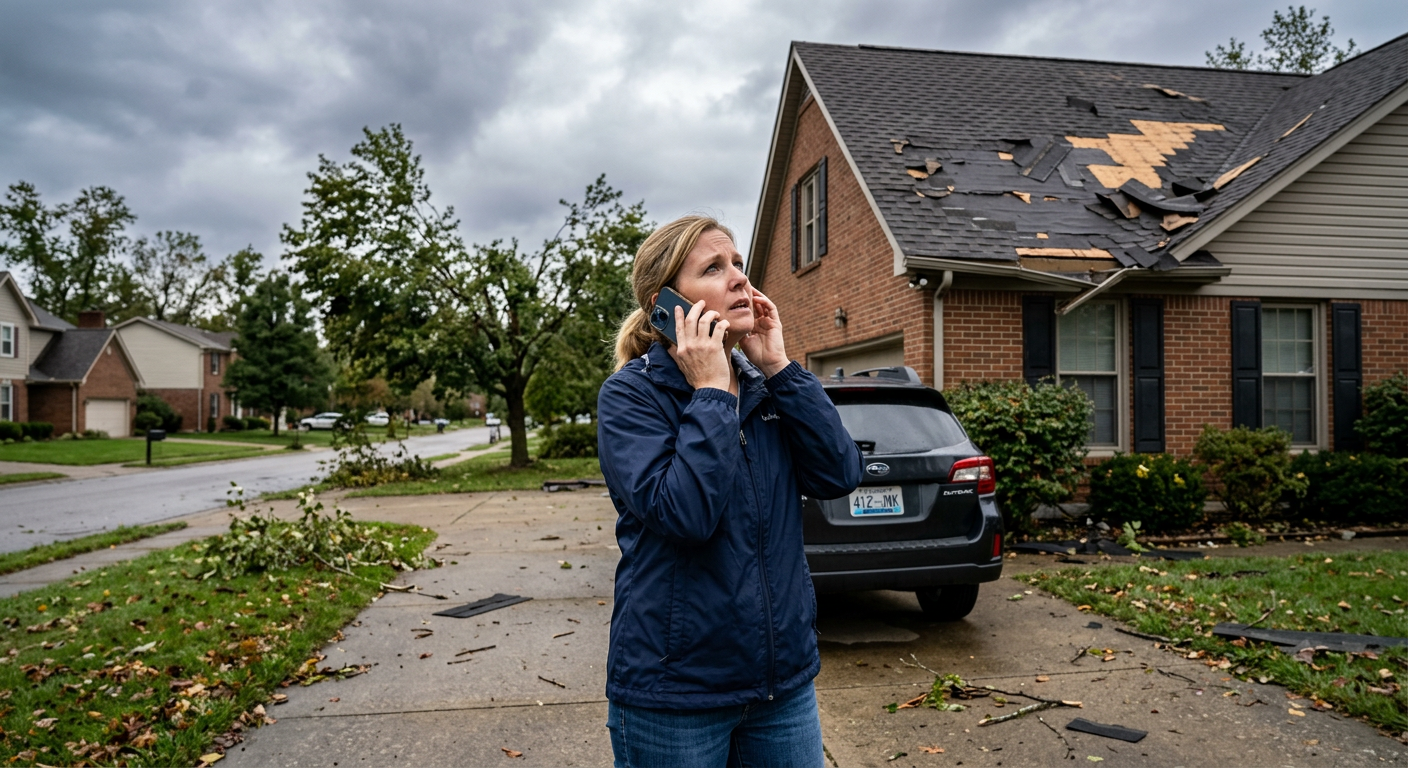
A severe storm just rolled through Louisville — high winds, hail, maybe a tree limb down in the yard — and now you're standing in your driveway wondering what to do next. The hours and days immediately following a storm are critical. The decisions you make in this window determine whether you get a full insurance payout, a partial one, or nothing at all.
Here's exactly what to do after storm damage to your roof in Louisville, KY.
Step 1: Stay Safe First
Before you do anything else, assess for immediate safety hazards:
- Downed power lines. If a tree or debris has brought down lines near your home, stay inside or far away and call LG&E (Louisville Gas and Electric) immediately. Do not approach downed lines under any circumstances.
- Structural damage. If a large tree has impacted your home or the structure feels unstable, evacuate and don't re-enter until a professional has assessed it.
- Gas leaks. If you smell gas, leave immediately and call 911, then LG&E from a safe distance.
Roof damage can be repaired. Don't rush into a dangerous situation to assess it.
Step 2: Document Everything — Before Any Repairs
This is the most important step for your insurance claim, and it's where many Louisville homeowners make a costly mistake: they fix things before documenting them.
Right after the storm:
- Walk the exterior and photograph all visible damage from the ground
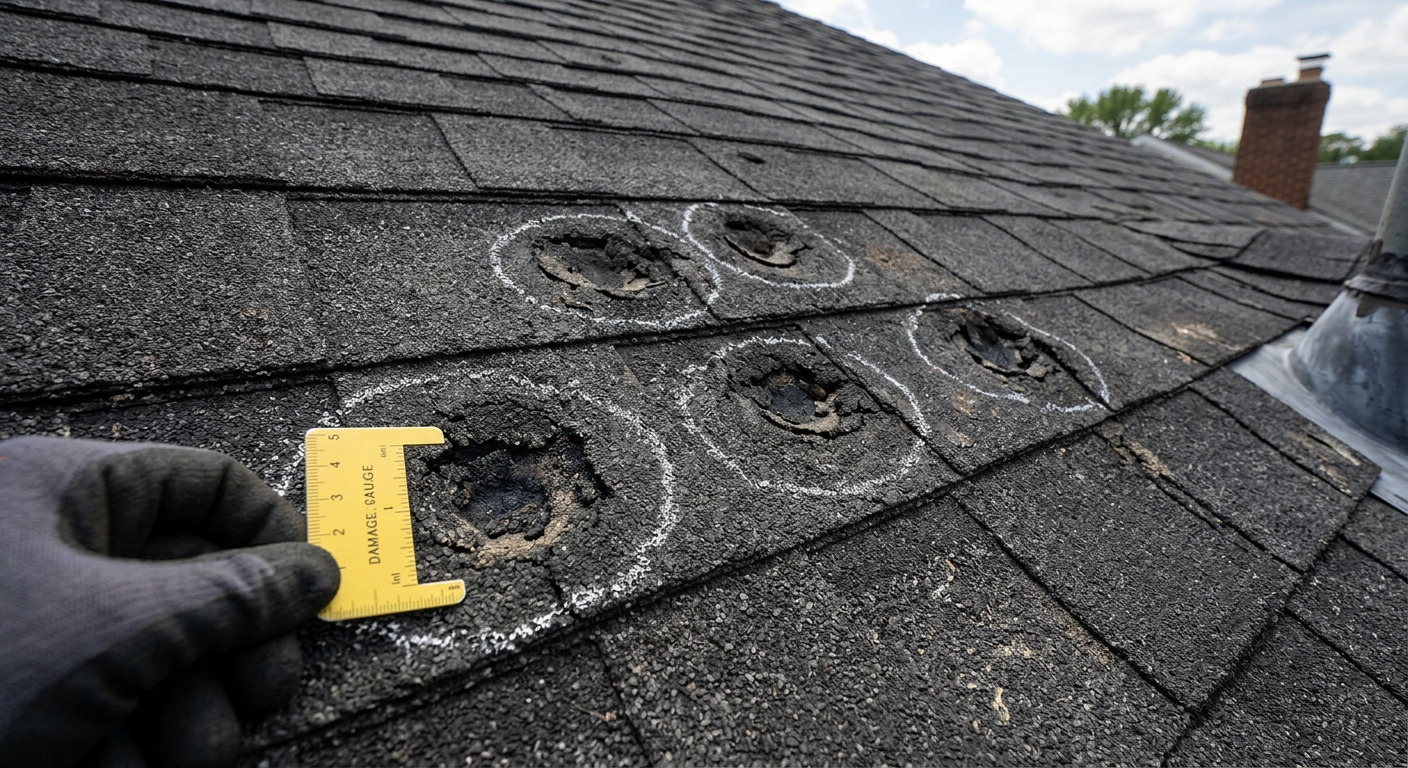
- Photograph damaged gutters, siding, windows, and any debris on the roof
- Take photos of interior damage — water stains, wet insulation, damaged ceilings
- Note the date and time, and screenshot or save any weather alerts confirming the storm event in your area
If you have time-stamped photos and a recorded weather event, you have the foundation of a strong storm damage roof repair claim in Louisville, KY.
Step 3: Prevent Further Damage With Emergency Tarping
Your insurance policy requires you to prevent "additional damage" after a storm event. This means if your roof has an obvious breach — a missing section of shingles, a damaged area where water will pour in during the next rain — you need to cover it promptly.
Temporary tarping is not a permanent repair. It's a protective measure that:
- Keeps interior damage from worsening
- Demonstrates to your insurer you acted responsibly
- Buys you time for a proper professional assessment
You can call a roofing contractor for emergency tarping, or in an extreme pinch, tarp it yourself — but safety matters. Don't get on a wet, damaged roof alone after a storm.
Step 4: Call a Local Roofing Contractor Before Your Insurance Company
This surprises many people, but getting an independent professional assessment before talking to your insurer is strategically smart.
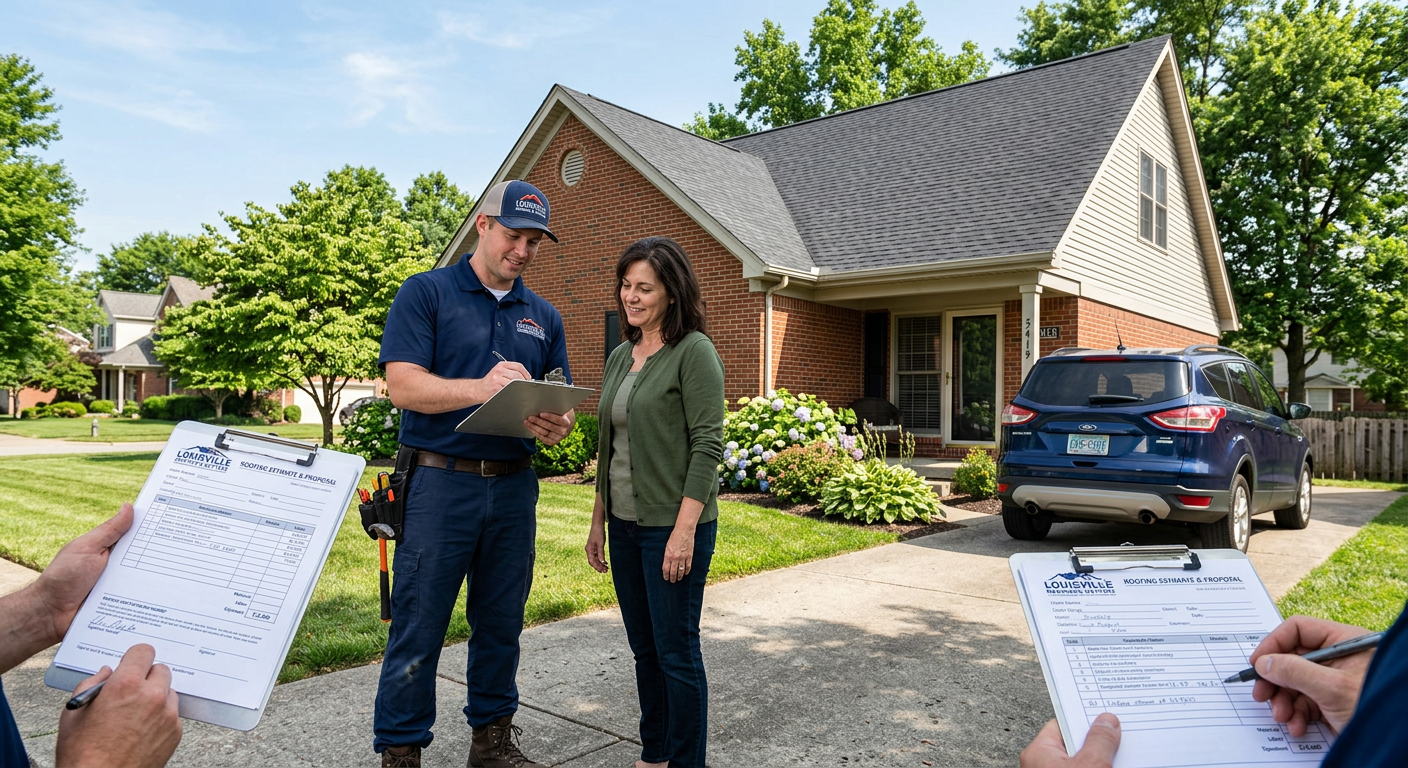
Here's why: insurance adjusters assess damage on behalf of the company. A qualified roofing contractor assesses it on your behalf. Their written report, photos, and estimate give you an independent data point before you've committed to whatever the adjuster initially offers.
After major Louisville storms — like the severe hail events that hit the east end in spring 2023 or the wind events that tore through Shively and Valley Station — contractors book up fast. Call immediately.
Step 5: File Your Insurance Claim Promptly
Most Kentucky homeowners insurance policies require storm damage to be reported "promptly" — which in practice means within a few weeks of the event. Don't wait months hoping the damage isn't that bad. By then, secondary moisture damage may have set in, and insurers may argue it resulted from neglect rather than the storm.
When you call your insurance company:
- Provide the storm date and type of damage
- Give them your claim documentation (photos, dates)
- Ask for a claim number and adjuster assignment timeline
- Request to be present during the adjuster's inspection
Step 6: Watch Out for Storm Chasers
After every significant Louisville storm, out-of-state contractors flood the area. They knock on doors, offer cheap estimates, pressure homeowners to sign contracts on the spot, and often produce substandard work — or take a deposit and disappear.
Red flags to watch for:
- Contractors who show up uninvited within hours of a storm
- Pressure to sign immediately "before they run out of materials"
- No Kentucky contractor license or local physical address
- Requests to sign an Assignment of Benefits (AOB) agreement
Use a licensed, established local contractor with reviews and a track record in Louisville.
What Storm Damage Roof Repair in Louisville Typically Covers
Depending on the storm type and your policy, covered storm damage roof repairs in Louisville, KY often include:
- Full shingle replacement on impacted sections (or full roof if widespread)
- Damaged flashing, vent covers, and ridge caps
- Gutters and downspouts
- Interior damage caused by the breach (ceiling, insulation, drywall)
- Code upgrades required by Jefferson County building codes
Don't assume partial damage means a partial claim. A roofing professional will identify the full scope.
---
Louisville Roofing & Siding responds to storm damage calls throughout Louisville and Jefferson County. We offer emergency tarping, free damage assessments, and complete storm damage roof repair in Louisville, KY. If your roof took a hit, call us at (502) 416-1707 — we'll be there fast, document everything properly, and help you navigate the insurance process from start to finish.
Need Help With Your Roof or Siding?
Louisville Roofing & Siding offers free estimates with no pressure. Call us today.