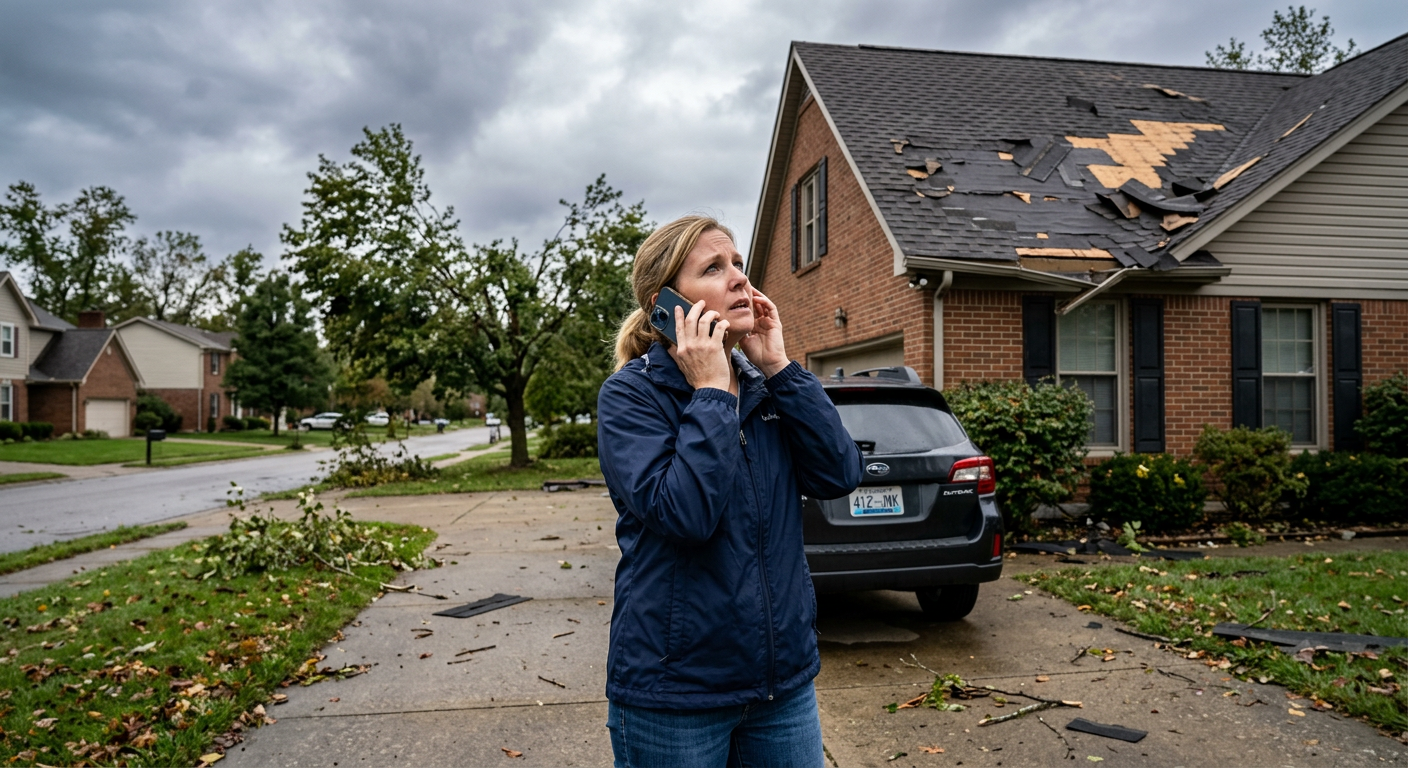
Louisville knows storms. From late spring supercells rolling in off the Ohio River valley to summer hailstorms that batter the Highlands and St. Matthews in minutes, Jefferson County homeowners deal with more hail events than most people realize. The problem isn't the storm itself — it's missing the damage afterward, letting it silently destroy your roof until the repair bill becomes a full replacement.
Here's how to spot hail damage on your Louisville roof before it costs you far more than it should.
Why Louisville Gets Hit Hard
Louisville sits in a geographic sweet spot for severe weather. Warm Gulf air collides with cold fronts pushing down from the north, and the Ohio River valley creates conditions that intensify thunderstorms. The National Weather Service regularly tracks hail events of 1 inch or larger across Jefferson, Oldham, and Bullitt counties — and even quarter-sized hail is enough to damage asphalt shingles.
The tricky part: hail damage doesn't always cause immediate leaks. Water intrusion can take months to appear, by which time you're looking at rotted decking, damaged insulation, and mold. That's why hail damage on a roof in Louisville, KY demands a close inspection within days of any significant storm.
Start at Ground Level — Check for These Signs
Before you climb anything, walk your property and look for these quick tells:
- Dented gutters and downspouts. If hail hit your gutters hard enough to dent aluminum, it hit your shingles too. Check the gutter edges for consistent round dents — that's a pattern, not random damage.
- Dented AC unit or metal flashing. HVAC condenser fins are softer than shingles and dent easily. If yours look peppered, your roof likely took the same beating.
- Chipped or cracked window screens. Another soft target that shows you what direction the storm came from and how intense it was.
- Damage to wood trim or fascia boards. Fresh dings in painted wood surfaces near roofline suggest significant impact force.
On the Roof: What Hail Damage Actually Looks Like
Hail damage on asphalt shingles doesn't look like a clean punch-through. Here's what you're actually looking for:
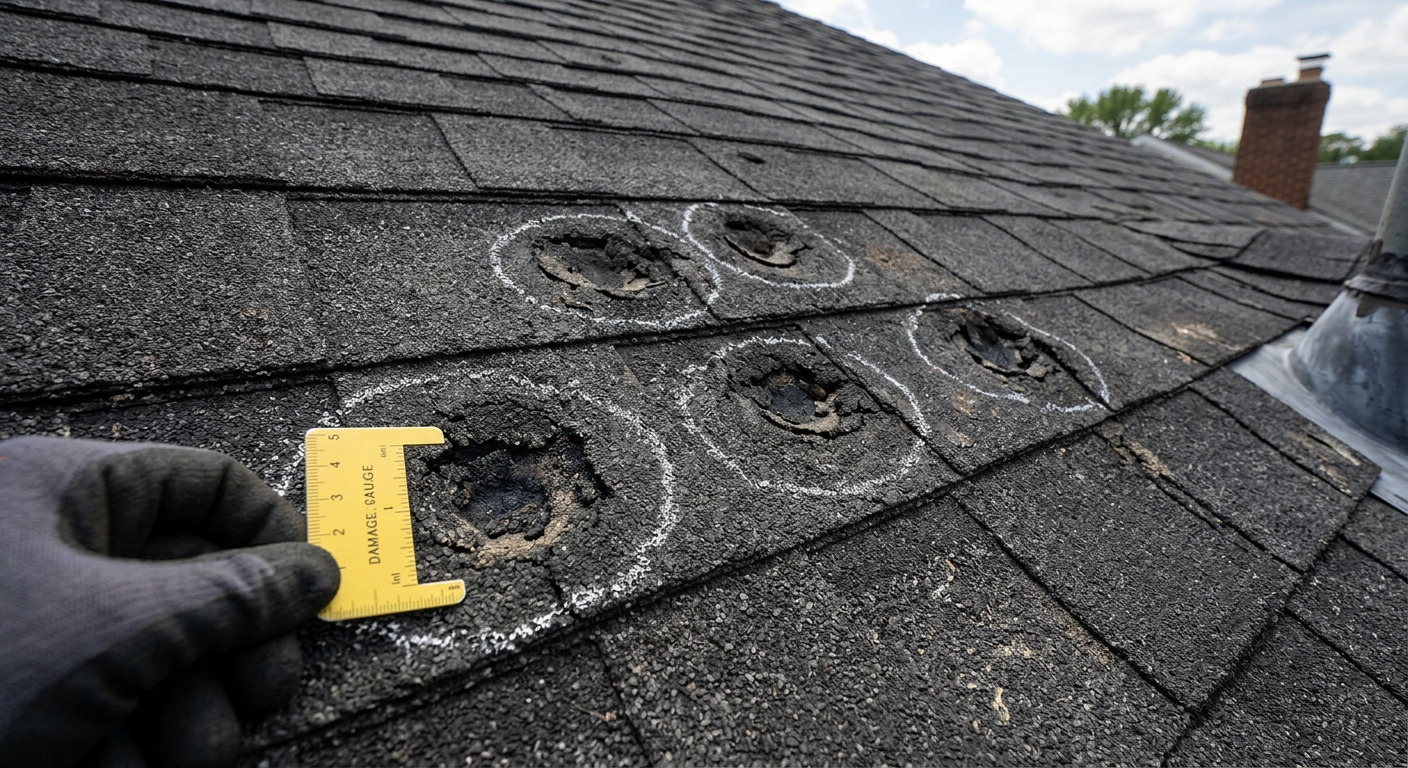
Granule loss in circular patterns. The protective granules on your shingles get knocked off by hail, leaving darker, exposed asphalt underneath. The key word is *circular* — hail hits in round patterns. Wind damage and wear are more linear or random.
Soft spots when pressed. Fresh hail hits bruise the mat beneath the granules. Press your thumb where you see granule loss — if it feels soft or gives slightly, that's structural damage, not just surface wear.
Black asphalt exposed. Where granules have been stripped, you'll see black or dark gray asphalt beneath. This isn't just cosmetic — UV exposure accelerates deterioration rapidly once the granule layer is gone.
Cracked or split shingles. Larger hailstones — anything over an inch — can crack shingles outright. Run your hand along the shingle surface and feel for splits or fractures.
Don't Forget Metal Roofing Components
Flashing, roof vents, and any metal cap or ridge material will show hail impact clearly. Look for:
- Round dents on pipe boots and vent covers
- Dented ridge caps
- Bent or pockmarked flashing around chimneys and dormers
These metal components are often more visually obvious than shingle damage, and a good inspector will photograph them as supporting evidence for your insurance claim.
When to Call a Professional
Louisville homeowners in neighborhoods like Crescent Hill, Lyndon, and Anchorage should get a professional inspection after any storm that drops hail at or above penny size (approximately 3/4 inch). Don't wait for a visible leak. By the time water's dripping into your attic, the damage has been compounding for weeks.
A qualified roof inspector will document granule loss patterns, probe for soft spots, check decking integrity from the attic, and provide a full written report — exactly what you'll need when calling your insurance company.
What to Do After You Find Damage
1. Document everything yourself first — photos, dates, timestamps 2. Check your neighbors' properties — widespread damage strengthens your claim 3. Contact a reputable local roofing contractor for a professional assessment 4. File your insurance claim promptly — Kentucky homeowners policies have deadlines
---
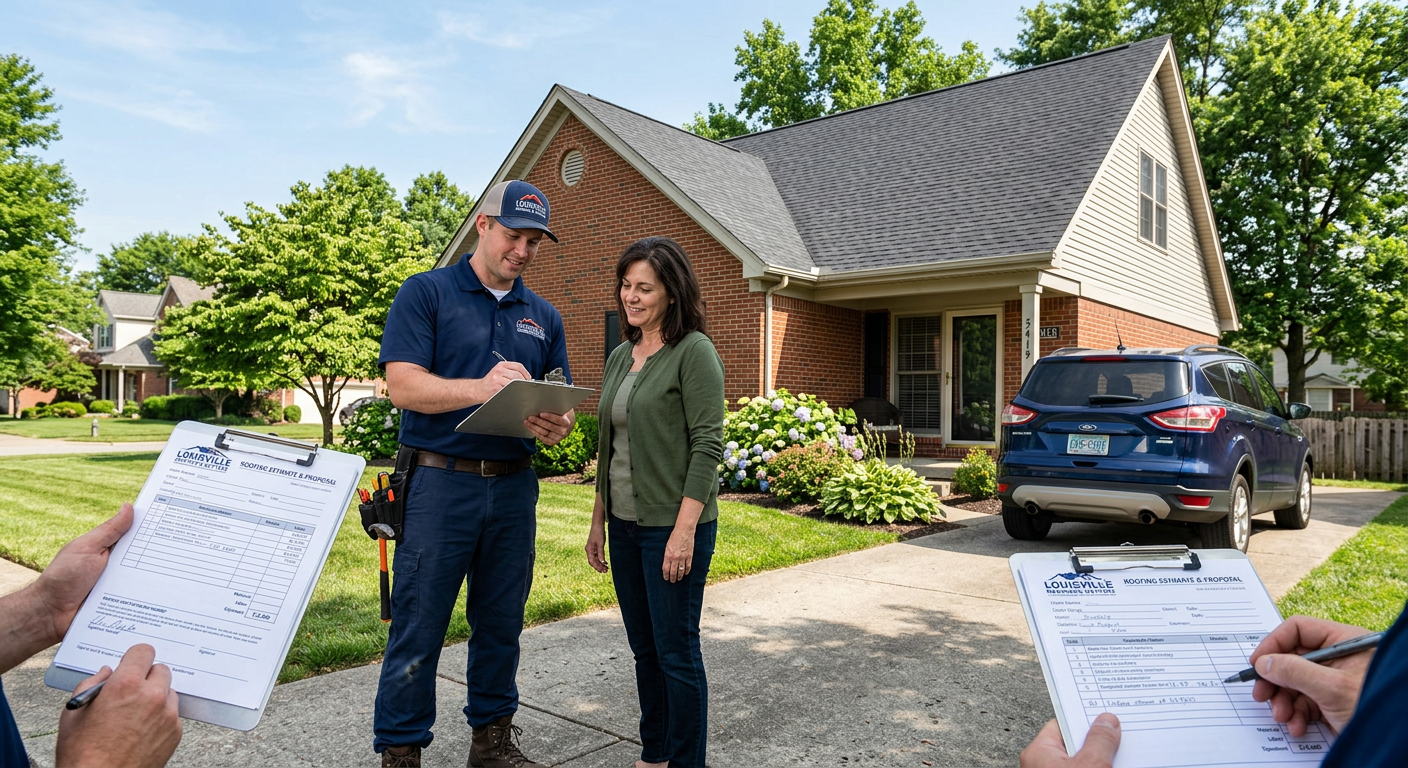
Louisville Roofing & Siding offers free roof inspections for homeowners who suspect hail damage after storms. If you've been through a recent hailstorm and aren't sure what you're looking at, call us at (502) 416-1707. We know hail damage on roofs in Louisville, KY — we've inspected thousands of them — and we'll give you a straight answer on what needs to be done.
Need Help With Your Roof or Siding?
Louisville Roofing & Siding offers free estimates with no pressure. Call us today.