Hail, wind, fallen trees — Louisville Roofing & Siding responds 24/7 and handles insurance claims start to finish.
Louisville weather is brutal on roofs. We've seen — and fixed — everything.
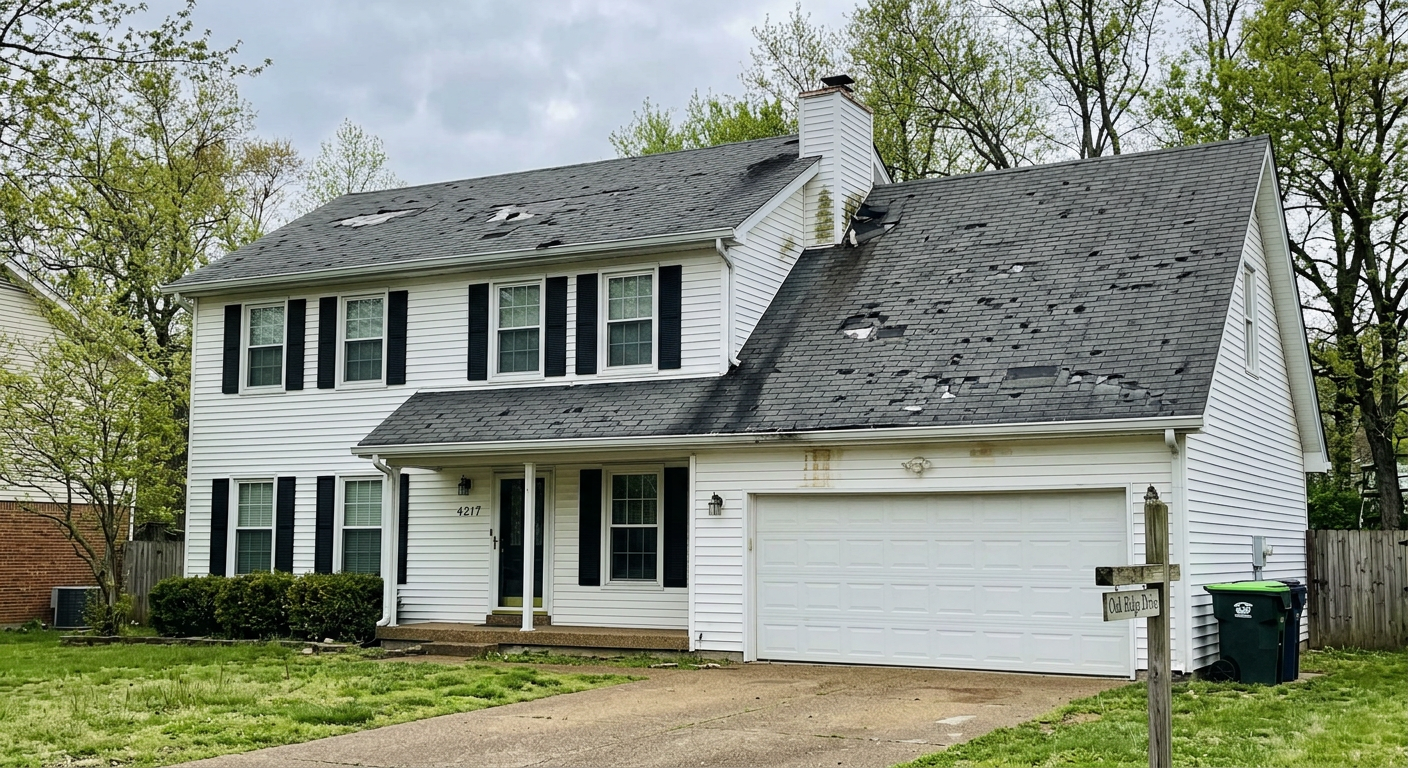
Hailstorms leave circular bruises and granule loss in shingles that compromise your roof's protective layer. We assess the full extent using drone photography and repair or replace as needed.
High winds strip shingles, lift flashing, and tear siding panels off homes. Louisville Roofing & Siding secures and restores your home fast to prevent water intrusion.
Fallen limbs and trees cause catastrophic structural damage. We handle emergency tarping, debris removal, structural assessment, and complete roof and siding restoration.
Storm damage often leads to leaks that cause mold, rot, and structural damage inside your home. We diagnose and stop leaks at the source, then repair or replace the affected area.
Lightning strikes can ignite roofing materials or compromise structural integrity. We assess, document, and restore roofs damaged by lightning and associated fire or heat damage.
Ice dams form when heat escapes through the roof, melting snow that refreezes at the eave. We remove ice dams, repair the resulting water damage, and improve ventilation to prevent recurrence.
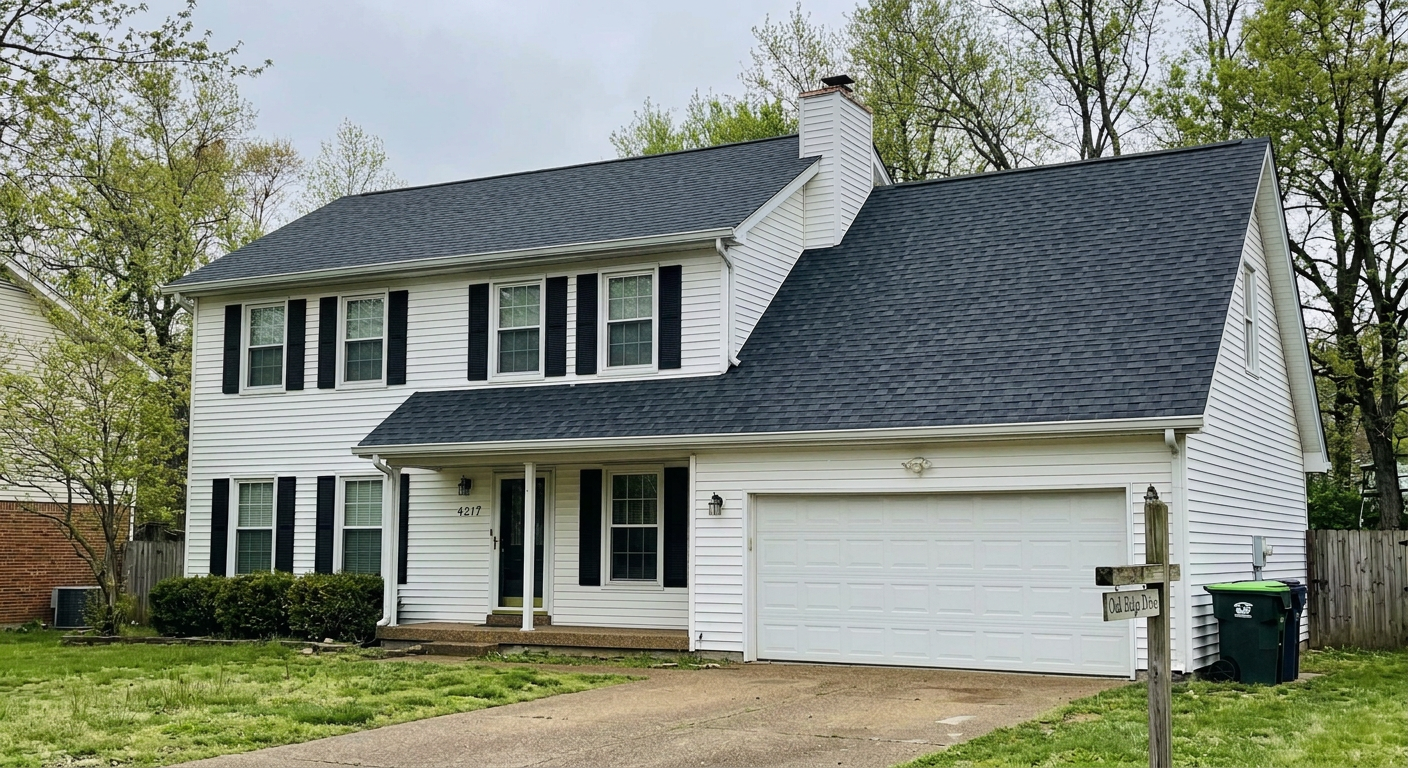
We restore roofs and siding back to full strength — or better.
We handle the heavy lifting so you get what you're owed.
We respond within hours to secure your home with emergency tarps, preventing further interior damage.
We document every inch of damage using drones, photos, and detailed written reports — exactly what your insurer needs.
We meet your adjuster on-site, present our findings, and advocate for the full scope of covered repairs.
Once your claim is approved, our crew completes the full repair or replacement — usually within days.
We walk you through the completed work, clean up completely, and ensure you're 100% satisfied.
Louisville Roofing & Siding is available 24/7 for storm emergencies. Don't wait — water damage compounds fast.
Jefferson County sits at a geographic crossroads where Gulf moisture, Great Plains storm tracks, and Appalachian terrain influences collide. The Louisville area averages roughly 50 severe thunderstorm events per year, with hail-producing storms hitting the metro multiple times annually. The most damaging events tend to be late spring and early summer supercells that track northeast across the county, dropping large hail — quarter-size to baseball-size — across densely populated neighborhoods.
The April 2020 hail event that tracked through East Jefferson County was one of the costlier residential insurance events in Kentucky history, totaling tens of thousands of roofs across Middletown, Jeffersontown, and the Hurstbourne corridor. The June 2023 derecho produced wind gusts measured at 75 to 85 mph across the metro, stripping shingles from thousands of homes in a matter of hours. These aren't once-in-a-generation events — they're the normal risk profile for Louisville homeowners.
Most Louisville roofs are covered under homeowner's insurance for this type of storm damage. What varies is whether homeowners know to file, whether they file before the statute of limitations (typically one year in Kentucky), and whether they have documentation adequate to support the claim amount.
The first thing to do after a severe storm passes is a visual check from the ground. Do not go on the roof yourself — wet, damaged roofing is slippery and structurally compromised. From the ground, look for missing shingles, visible structural damage, debris impact, and displaced ridge cap. Check the attic for daylight visible through the roof deck or any new wet spots on the insulation.
Take photographs of everything you can see from the ground and from inside the attic. Timestamp them. Check your yard and gutters for granule accumulation — heavy granule loss from shingles shows up as dark, sand-like material washing into downspouts and collecting in gutters, and it's one of the clearest signs that hail has damaged your roof's surface.
If you see visible damage or find any signs of water intrusion, call for an emergency inspection the same day. Do not wait for the insurance adjuster's timeline. The longer a breach stays open, the more secondary damage accumulates — and secondary damage from delayed response can complicate or reduce your claim. Louisville Roofing & Siding offers 24/7 emergency response and can tarp open damage the same day to stop the clock on water intrusion.
Contact your insurance carrier to open a claim as soon as you have initial documentation. You do not need a contractor's estimate to open the claim — just open it while the storm is fresh and before adjuster backlogs make scheduling difficult.
When Louisville Roofing & Siding inspects a storm-damaged roof, we document with the level of detail insurance adjusters need to approve a full replacement or repair. This includes drone photography covering the entire roof surface, close-up photos of impact marks, granule loss patterns, lifted or missing shingles, and flashing damage. We document damage to all roof components — not just shingles, but also ridge cap, pipe boots, step flashing, skylights, and gutters, which are commonly damaged in hail events and often overlooked in initial claim assessments.
We provide a written scope of damage that matches the format adjusters use in their own reports. When the scope is written in a way adjusters understand, approvals move faster and disputes are less common.
The most common damage patterns we find after Louisville storms are: hail impact bruising and granule loss on the field of the shingles (visible as circular dents and bare asphalt spots), lifted or blown-off shingles along the ridge and rake edges where wind uplift is greatest, separated flashing at chimney bases and walls, and dented or punctured pipe boots. Hail also damages gutters, downspouts, and aluminum trim in ways that support a comprehensive claim — these elements are often overlooked but are legitimate components of the damage.
If you experienced a recent storm and haven't had your roof inspected, call Louisville Roofing & Siding at (502) 416-1707. We offer free storm damage inspections across the Louisville metro, and we'll give you an honest assessment of what you have — whether the damage warrants a claim or not.